Showing posts with label On Screen. Show all posts

Monday, April 13, 2020

[Movie] The Way

From here

I watched the movie a few days ago out of randomness, and it turned out to be the right movie for the Sunday Easter. So I guess I will write a bit about the movie, especially since there is nothing exciting during this quarantine period.

Thomas Avery (Martin Sheen), an ophthalmologist in California, US, divides his busy life between his practice and golf meetings with his friends until he receives a phonecall from Saint-Jean-de-Pont, France, informing him of the death of Daniel Avery (Emilio Estevez), his only son. Daniel was in France to walk on Camino de Santiago, a pilgrim's route that spans between Saint-Jean-de-Pont, France and Santiago de Compostela in Spain.  

The older Avery immediately comes to France to bring back his son's remains. But as he checks on Daniel's backpack, he remembers how his son wanted to walk the Camino with him. So he asks the officials to cremate his son and starts on the path to Santiago with the ashes on his backpack.

During the walk to Santiago de Compostela, he meets with Joost (Yorick van Wageningen) a Dutchman wanting to lose some weight, Sarah (Deborah Kara Unger) a Canadian fleeing her abusive husband but saying she does the walk to quit smoking and Jack (James Nesbit) an Irish with a writer's block. 

Apart from giving audience beautiful views along the road, The Way is a philosophical movie that tells how people can take many roads in Camino de Santiago to reach the final point. One of the questions posed during the movie is about how the pilgrims should carry out the trip to Santiago de Compostela as they see people riding bicycles. Should the modern day pilgrims walk as people in the past did? Should the modern day pilgrims leave all the conveniences (such as credit card and smartphone) and live from the kindness of the people they meet along the way to Santiago? 

The movie is a bit slow-paced, but I think it's worth to watch during this quarantine period as it will make you questions life and how we live it.

Monday, February 24, 2020

[Movie] SEMES7A, A Movie About Indonesia, Environment And People Who Are Trying To Save Both

From here

2019 | Director: Chairun Nissa |

I got a free ticket to watch this movie through a giveaway contest. I have barely won any giveaway, so I was very excited when I got it.

The documentary tells seven areas across Indonesia and seven people who are trying to save the environment using the local wisdom and the belief system they hold onto. Watching this movie will remind you that Indonesia is more than just beautiful natural resources, but this equatorial jewel also has rich culture and kind people.

First to be featured in the movie is Bali, a predominantly Hindu community in a predominantly Muslim country. The Hindu community in Bali celebrates Nyepi, Day of Silence, when people are not allowed to light up fire or electronic devices and talk or make any sound. A report says that Nyepi cut 30,000 cubic meter carbon.

From Bali, the film moves to Sungai Utik, West Kalimantan, where a Dayak community tries to guard the forest using the local wisdom that has been passed for generations. For example, in one year, an adult can only cut down three trees (CMIIW). They only hunt boars, and leave the orangutans at peace. 

Meanwhile, a community in Pameu, Aceh faces challenge in their life as the wild elephants destroyed the paddy field. Some consider killing or poisoning the elephants, but some others decide to take a step back and let the elephants to roam the land. As Aceh is called the terrace of Mecca, the Islamic cleric gives sermon that emphasizes the importance of maintaining harmony with the environment,

An effort to restore micro hydro power plant in Ruteng, Flores, East Nusa Tenggara is featured in the movie. The Catholic priest leads the community to generate electricity from the rivers, and when a recent flood destroys the turbine house and the levee, the community decides to chip in to bring back the clean energy to their village.

Another local wisdom is shown by the mothers community in Kapatcol, Raja Ampat, Papua as theyput a sasi (a ban to fish or take anything from a certain sea area for a certain period of time) to protect the sea. [Tangent: sasi is a common practice in Maluku and Papua, I once saw similar procession in Kei Kecil island, Maluku.] After the sasi is lifted, the mothers harvest the sea products, only take the big ones and return the small ones back into the sea.

The movie takes us to Yogyakarta, where Bumi Langit is located. The permaculture farming and food forest run by Iskandar Waworuntu and his family teaches audience that there is an alternative for better agriculture system that does not destroy the environment.

Kebun Kumara in Jakarta is the last story to close the movie. Founded by young couple Sandra and Dhira, Kebun Kumara tries to bring the greenery back into urban areas through urban farming. [Tangent: I went here last year for a gardening class, you can check their activity on IG @kebunkumara] 

There was a movie discussion after the screening with the director explaining on the process, the challenge and the hope for the movie. Ilun, as the director often called, explained that the movie featured seven communities and seven people due to the movie duration. So it was all about practicality, not lucky number. 

She ties in the seven stories by moving from one island community (Bali) to a tribe (West Kalimantan) to a village (Aceh) to a hamlet (East Nusa Tenggara) to a community (Papua) to a family (Yogyakarta) and to a young couple (Jakarta). Apart from the environment issue, she also features religion as one of the main themes, to show that all religions teach humans to take care of the environment, not destroy it.

It is an interesting movie to watch. Go and watch this if you have the opportunity.

Monday, February 17, 2020

[Movie] Kim Ji-young Born 1982

From here

2019 | 1 hour 58 minutes | Director: Kim Do-young

I watched this movie after 'Parasite' won the 2020 Oscar, and I would recommend anyone to watch this. South Korean movies have solid stories and touching ways to deliver the message, this movie just made me crying, in a good way, of course.

An adaptation from the novel of the same title by Cho Nam-joo, the movie centers on Kim Ji-young (Jung Yu-mi), a young mom of a five year-old girl Ah-young, who feels that she is not doing well enough. She spends the days taking care of household chores, the baby and the family, but she will feel empty every time she watch the sun set from the apartment's balcony.

Her husband Jung Dae-hyun (Gong Yoo) is worried because he sees how Ji-young often speaks as if she is inhabited by her mother/older sister/late grandma. At first he thinks it's postpartum syndrome, but as their daughter grows older, the signs continue. Ji-young sometimes drinks beer in the middle of the night, and does not remember anything about it. He urges her to see a psychiatrist, but she keeps skirting the subject, especially when she knows that the cost is expensive.

As the movie progress, audience will learn slowly on the cause behind Ji-young's condition. The movie moves back and forth, showing Ji-young when she was little, when she was teenager and during her employee stint period. Her mother, who quitted school to work as a tailor and supported the family, once told little Ji-young that she dreamed of becoming a teacher, but she had to give up dream to fend for the family.

Another scene shows how teenage Ji-young is being harassed in a bus. She manages to escape after she asks help from a woman who sees that she looks uncomfortable. However, her father blames Ji-young for wearing short skirt. Her father also once told her to just get married, during which her mother cut him short and encouraged her to pursue her dream and live the life she wants.

Before she was married, Ji-young works in a company. She admired her female boss, and once thought that the boss hated her. But the boss explained that the company needed a solid team that could spend long time. The boss, reflecting on her own situation as a working mom, did not want to place Ji-young in a difficult situation. The innocent Ji-young confidently said that she would still do well like the boss after she was married and had children.

Once Ji-young was married, the patriarchal culture and the societal pressure in South Korea that demand women to get married and have children come barreling down. Dae-hyun asks her to try having children, although she is still not ready. Similar pressure is also faced by Ji-young's older sister, Eun-young, who is still single, but she just shrugs it off.

It turns out that patriarchal culture and rigid family structure become the main cause of Ji-young's mental breakdown. In one scene, Ji-young should visit her mother-in-law with Dae-hyun. Just when she is about to complete her dish washing duty, her sister-in-law comes and her mother-in-law asks her to serve food for the newly visiting family members.

While Dae-hyun does not understand what exactly has happened, he knows that his wife is not feeling well. He sees how Ji-young's face lit up when informing him about a new job offer from the former boss, and suggests that he takes parental leave to take care of Ah-young on her first year at the new office. He just wants to see Ji-young happy again, and if a new job will bring back the woman he loves, he will do anything. However, when Dae-hyun's mother hears the news, she scolds Ji-young for putting her son's career at stake by telling him to take parental leave. The conversation with the mother-in-law sends Ji-young to another depression state, which makes her talking as if she is her late grandmother.

Dae-hyun finally breaks the fact to Ji-young, by showing a video of her talking like her mother. Taking the news bravely, Ji-young decides to put her mental health first. She turns down the job offer to start therapy sessions with the psychiatrist that Dae-hyun suggests, starts journaling, and stands up when several people say she is not a capable mother behind her back.

My take on this movie: I guess all Asians have similar condition, because the family structure is more than just nuclear family, but also unite the families from both the husband and wife. It's important to get a spouse who really love and take you as you are, not as the extended family demands her/him to be. Also, couples should communicate on their vision ahead of the marriage. Some women still want to work in office and do something in the community, but they have to end their dream because the patriarchal culture deems their dreams are unworthy. I love that Ji-young and Dae-hyun work together to solve the issue because that's what good marriage is. Happy women make happy families, and in the end will make happy nation.

Wednesday, February 5, 2020

[Movie] Knives Out - An Agatha Christie-esque Mystery Thriller Movie

From here

[Disclaimer: Beware of spoilers. But of course, when I write movie review, you can always expect spoilers. LOL.]

I have been hearing rave reviews about Knives Out, so when a friend asked me to accompany her to the movie, this Agatha Christie fan was definitely in. I watched this movie last month, or was it last year, I forgot, but the fact is this movie has been put back in the theaters show how good it is.

The movie is written, produced and directed by Rian Johnson. At the 77th Golden Globe, it received three nominations. This month, Lionsgate announced that a sequel is in the works, possibly centered on Daniel Craig's character.

First of all, this movie has an all-star cast, such as Christopher Plummer who was the charming Captain von Trapp in 'The Sound of Music (oh how he aged beautifully like a fine wine, but I digress), Don Johnson (I still remember him from Miami Vice days), Daniel Craig, Chris Evans, Jamie Lee Curtis, and Toni Collette. But the one who steals the spotlight is doe-eyed Ana de Armas.

Ok, let's start with the basic opening.

Wealthy crime novelist Harlan Thrombey (Christopher Plummer), celebrates his 85th birthday and invites his family to his mansion. The next day, Fran (Edi Patterson) the housekeeper finds him dead with his throat slit. The police are convinced that it is a suicide, but an anonymous party has hired private detective Benoit Blanc (Daniel Craig) to investigate the case.

During the interview with the family members, the detective finds that Harlan did not get along with most of them as he threatened son-in-law Richard (Don Johnson) to expose his cheating with wife Linda (Jamie Lee Curtis), cut off daughter-in-law Joni's (Toni Collette) allowance for stealing from him, fired his son Walt (Michael Shannon) from publishing company and had an argument with grandson Ransom (Chris Evans). Detective Blanc later confirms with Harlan's nurse Marta Cabrera (Ana de Armas), who has a unique trait: she cannot lie without vomiting.

[More spoiler ahead. You can stop here if you like.]

At the reading of the will, the family discovers that Harlan left everything to Marta. As everyone getting mixed sentiments against her, she flees the house, with the help of Ransom. To calm her down, Ransom takes her to have something to eat a restaurant and, knowing that she can empty her stomach upon the thought of lying, asks her to tell the truth. Marta tells Ransom about the night before Harlan's death, that she gave Harlan the wrong medicine, which led Harlan to commit suicide because he knew that Marta's mother is still an undocumented immigrant and a suicide case can clear Marta off any charges to continue working and taking care of her mother. Ransom offers to help her with a share of the inheritance.

Marta receives a blackmail note with a partial photocopy of Harlan's toxicology report. She and Ransom go to the medical examiner's office, but it was burned down. When she checks her email, she reads a similar blackmail note with an address. Detective Blanc and the police, who is examining the fire that burned down the building, spot Marta and Ransom. After a brief car chase, the police catch Ransom and Blanc tells her that Harlan's mother saw him climbing down from Harlan's room.

Marta goes to the address in the email and finds Fran drugged, along with her missing medication bag. She hesitates to help as Fran can link her to to Harlan's death, but she still performs CPR and calls 911 ambulance. Marta confesses to Blanc, and they go back to Thrombey Manor, where she gets the full toxicology report in Fran's hidden cannabis stash. Marta is about to confess to the family, but Blanc stops her after reading the report.

The detective ushers her into a room and tells her his deduction: during the party, Ransom learned that Harlan would give everything to Marta, Ransom left the house and returned from back door, swapped the labels on Marta's medication vials and took the antidote so she would kill him with an overdose of morphine, making her ineligible to claim the inheritance. However, Marta actually administered the correct medicine because as registered nurse she can tell which medicine to give without reading the labels, and therefore, she is innocent. After the death is reported as suicide, Ransom hired Blanc. Fran later saw him hiding Marta's bag and sent him a blackmail note. Realizing that Marta had unknowingly given Harlan the correct medicine, Ransom forwarded the mail to Marta. He also burned the medical examiner's office, drugged Fran and emailed the location to Marta, to frame her for Fran's murder.

[My mind was already exploded at this phase. But wait, there's more.]

Blanc and Marta collaborate to make Ransom confesses by saying that Fran survives and ready to testify against Ransom. Enraged, Ransom admits everything and vow revenge, and the police records his words. Fran has died, actually, and Marta vomits on Ransom.

I can't wait for a sequel and I will look forward to watch the next movie by Rian Johnson.

Wednesday, January 8, 2020

[Movie] Marriage Story - A Movie Review With Some Thoughts On Marriage

From here

Disclaimer: spoilers ahead.

I read rave reviews on how good 'Marriage Story' is, so I decided to spend 137 minutes to watch the movie that is directed by Noah Baumbach. It is a movie that makes you question life and of course, marriage, as the title implies, in which it could be the reason it gained many award nominations. 

The movie opens with the voice of Charlie (Adam Driver) and Nicole (Scarlett Johansson) reading their notes on what they like about their spouse, elaborating on each other good traits and showing their beautiful life in New York as theatre director husband and actress wife. However, the scene slowly turns to sour as the camera shows both Charlie and Nicole sitting awkwardly, away from each other, in the marriage counselor room. The counselor kindly asks them to read the notes out loud, but Nicole refuses and leaves the room.

The next few minutes have yet to give any clue on the problems faced by the couple. People think they are the perfect power couple, as Charlie directs plays and Nicole stars in his plays. The couple, who has been married for around 10 years (I assume, because their son Henry is about eight years old), decide to split amicably, without involving any lawyers.

As Nicole wants to return to LA for a few months to work on a TV series, she brings Henry along with her. During her stay in LA, she consults with Nora, a lawyer played by Laura Dern, who suggests that Nicole files for divorce.

And then things get nasty.

Nicole feels that during her marriage, Charlie never considers her requests to try living in LA, where her mother Sandra (Julie Hagerty) and sister Cassie (Merrit Wever) live. She says that Charlie once had an opportunity to get artist residentship for one year in LA, but instead he took a six-month project in Denmark (or some Scandinavian country). She also thinks Charlie slept with the theatre manager, which was later proved to be true.

When Charlie comes to visit Henry, he tells Nicole that he wins MacArthur fellowship grant. Nicole congratulates him, and Charlie says in passing that he will not be able to do it without her. For a second, it feels like Nicole is considering to cancel the lawyer thing. But then Charlie is busy searching for something in the kitchen, and Nicole makes up her mind.

Cassie enters the kitchen, to give Charlie the divorce paper and is told to find a lawyer. Charlie meets with Jay (Ray Liotta), who told him to go dirty. Jay says that since the marriage was done in LA and Henry was born in LA, there is a big chance that Nicole wins the case if it is held in LA courts. Jay suggests Charlie to file the case in New York. Charlie refuses and returns to New York without hiring any lawyer, only to receive a phonecall from Nora who reminds him to get a lawyer or face the risk of losing custody over Henry.

Charlie hires Bert, a lawyer with conciliatory approach. During a meeting between the parties, Nora shows Charlie and Bert that Nicole has better chance of getting the custody. Bert later advises Charlie to drop his residency in New York, which makes Charlie furious and fire him. Charlie finally hires Jay, and the court room scenes become the battle ground between the two lawyers.

The movie could be a personal project for director Noah Baumbach, who was divorced from actress Jessica Lange, and Scarlett Johansson, who was divorced from journalist and art consultant Romain Dauriac. However, Adam Driver also delivers great acting as a cold and inexpressive theatre director. In many points along 'Marriage Story', I can't help thinking that this marriage can still be saved and that there is still hope for the couple.

The problem in Charlie and Nicole's marriage is, similar to other marriages (methinks), the lack of communications between the couple. Nicole, who left her career in LA to be with Charlie, feels that her efforts are under-appreciated. As Charlie (and his theatre group) takes the spotlight, Nicole begins to question whether she can do better and whether there are other career choices out there. She starts to avoid Charlie at home, and Charlie seeks comfort from other people (bad choice, Charlie).

Since marriage consists of two people, we can't just blame Nicole or Charlie for the divorce. But on second thought, the divorce may not be a bad thing for them as they become on friendly terms after the decision comes out. All in all, I think this movie is good for both married couples and singles, as it gives us the harsh reality that it is hard to live and share your life with another human.

Thursday, December 28, 2017

[Movie] The Alchemist of Happiness


2004 | Director: Ovidio Salazar | 80 minutes

A friend introduced me to this movie, which is available on this link (I hope it will still be available in the long run). I also hope I can do this movie and this Muslim figure a bit of justice through this review.

The movie tells the life of Imam Al Ghazali through three methods: (1) actors portraying Imam Al Ghazali and people in his life, (2) the narrator who travels to Imam Al Ghazali's notable sites, and (3) the scholars who had conducted extensive studies on Imam Al Ghazali and his works.

Born in 1058 in Tus, Khorasan - present day Iran - Al Ghazali started to learn about sufism after the passing of his father that made him and his little brother to be in the care of a Sufi. He was thirsty of knowledge and would go to other cities to learn about theology from teachers, scholars, lecturers and people of knowledge.

But some of his most important lessons came from unexpected source. Once, his travel group was ambushed by a gang of mobs. He pleaded to one of the mobs to not destroy his textbooks and other writings he had copied from his teachers. The mob looked him in the eye and said,"So all I have to do is take them from you to strip you of your knowledge."

He began memorizing his lessons because he realized that "you only possess what you don't lose when the ship wrecks." He didn't write anything on the theology until he had memorized at least 12,000 pages written by great theologians on Islam.

He joined the court of Nizam al Mulk, a powerful vizier of the Seljuq sultan, and soon came to prominence in Nizamiyyah college in Baghdad. However, he experienced a spiritual crisis in 1095, during which he decided to go on a pilgrimage and live in seclusion.

Al Ghazali lived during the period of upheavals and uncertainties. People looked up to the clerics and took sides. As time went by, many people only had concerns on who-said-what without paying attention or questioning that what the clerics said could possibly be wrong. It's pretty much like today.

Al Ghazali realized that human's nature and one of its basic conditions is the emptiness and ignorance to the unseen world of God. He observed that the external factors shape different forms of revelation and religious experience.

Syaikh Hamza Yusuf from Zaytuna Institute says that God is the Ultimate Concern, and if we replace God from our lives, we should find a substitute. "This is human nature, to fill that hollow space, because humans are hollow beings," he says. 

Syaikh Hamza Yusuf adds that Imam Al Ghazali gets the idea of what will ultimately come and perishing, and what goes on forever. Therefore, Al Ghazali spends his lifetime to learn what one needs for the infinite journey.

But what does one need? What is the human nature, or fitrah as Muslim calls it?

D. Mahmoud Bina, Professor of Mathematics and Philosophy at Isphahan University of Technology, says that fitrah means nature of man as created by God. It is love of God and worship of God, because that is what humans created for. "The highest worship is to know (ma'rifat) God. If serving God means knowing God, then it signifies that God has given men the tools that one can know Him," he says.

Al Ghazali takes the knowledge in the cosmology based on the Islamic concept of Tauhid (oneness) and how the unity of God manifests through the diversity in the world. One of the many veils that keeps people from seeing God is religious fanaticism. For Al Ghazali, "an ignorant Muslim is more dangerous than non-believer because the ignorant only accepts what is right by who said it, rather than what has been said."

TJ Winter, Lecturer of Islamic Studies at Cambridge University, said that Al Ghazali showed that in the heart of every belief, every practice of Islam, there is a spiritual purpose, process of repentance and transformation (hijrah). That is why Al Ghazali is called Proof of Islam.

Monday, December 11, 2017

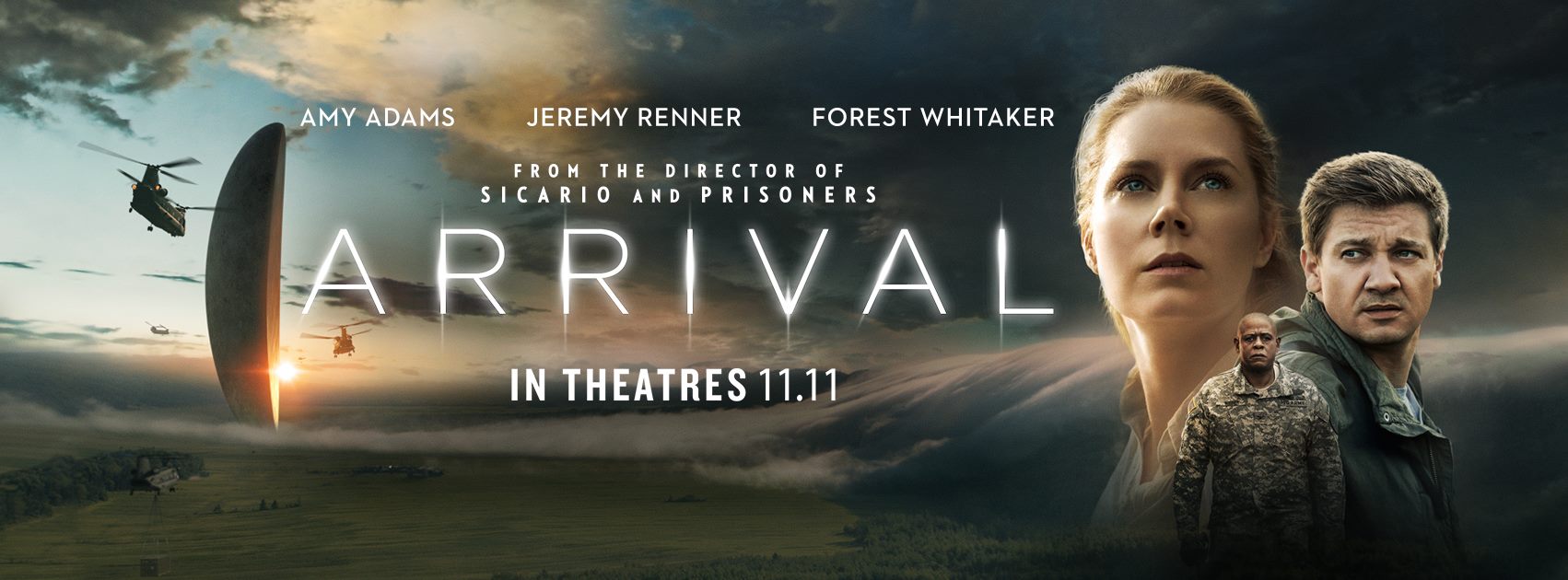
[Movie] Arrival


2016 | Director: Denis Villeneuve | 1 hour 56 minutes |

I have just watched this movie during a weekend's movie marathon. Although it's a sci-fi movie on alien, it has been giving me some philosophical thinking.

"Memory is a strange thing, it doesn't work like I thought it did. We are so bound by time, by its order." 

The words of linguist Louise Banks (Amy Adams) opens the movie, followed with a quick recap on her life with her daughter Hannah who later died of cancer. Then it brings audience to the day 'they' arrive. They are 12 unidentified extra-terrestrial objects that land on 12 locations worldwide. One of the objects is in Montana.

Charcoal gray and rough to the touch, the objects are suspended in the air with their tips facing downward, making a pretty cool way for an entrance. A few days after their arrival, no humans are abducted, no threats are announced. The objects stay in silence and grace, while the aliens make appearances and give messages in certain time.

Due to her linguistic expertise, Louise is recruited by the US Military to translate the messages and figure out why they are here. To be able to understand the language, Louise goes with Ian Donnelly (Jeremy Renner) inside the objects, where gravity takes a holiday. Both manage to establish communication with the heptapod duo, who are later named as Abbot and Costello, after the famous comical duo.

The movie is a bit lagging in the middle, giving audience little bits of information along the way. The conflict in the movie is built through excerpts of missed communication between the 12 countries where the objects are located, news that escalate fear and distrust among the military personnel and scenes of the expert duo working hard to translate the message. I think Amy Adams nails the role perfectly as a calm linguist who works hard to hold everyone down until she manages to get things straight.

Language and communication are the things we do every day and yet, many still can not get or send their messages right. The movie reminds us, through its many beautiful quotes on language and communication, that those fields of study most people look down are actually the ones that tie human together.

  • Language is the foundation of civilization. It is the glue that holds people together. It is the first weapon drawn in a conflict. - said by Ian Donnelly to Louise Banks in the military aircraft, it's a passage from the preface she wrote.
  • The language you speak determines how you think and see everything. - quoting the Sapir-Whorf hypothesis
  • Like their ship or their bodies, their written language has no forward or backward direction. Linguists call this non-linear orthography, which raises the question,"Is this how they think?" - Ian Donnelly on translating the heptapod language
  • The weapon is their language. They gave it to us. If you learn it, when you really learn it, you begin to perceive time the way that they do, so you can see what's to come. But time, it isn't the same for them. It's non-linear. - Louise Banks

The movie also has a mind-bending ending, which is quite refreshing for a Hollywood production. There is a question in the movie that has been lingering in my mind:

If you can see your whole life from start to end, would you change things?

Monday, December 4, 2017

[Movie] Marlina, The Murderer In Four Acts


2017 | Director : Mouly Surya | 95 minutes

A co-production between Indonesia, Malaysia, Thailand and France, the movie tells about the story of one Sumbanese woman Marlina and her journey to find justice.

The movie opens with Act I, The Robbery, where the newly widowed Marlina (Marsha Timothy) receiving an unexpected visit from Markus (Egi Fedly), who nonchalantly told her that there would six more men coming to take her money and her livestock. "And if we have time, we'll sleep with you," he said while playing a small string instrument next to Marlina's mummified dead husband.

He told Marlina to prepare food (chicken soup) for his robber gang, and even demanded to be served betel nut and coffee, just like a respectable guest. Marlina does as told, but adds a secret ingredient that leaves four robbers die after consuming the soup. When she tries to serve Markus the soup, she drops the plates and then decapitates him as he forces himself on her.

Two other robbers already leave with her livestocks: 10 cows, 10 pigs and seven chicken. She spends the night burning the small string instrument in the kitchen and leaning to her dead husband in the living room.

Act II, The Journey, shows Marlina leaving home the next morning, with Markus' head in tow, to report the case to the police. She runs to her heavily pregnant neighbor, Novi (Dea Panendra), who is on her way to the city to reunite with her husband Umbu. The chatterbox Novi as well as a lady who is delivering two horses for her nephew's wedding do not balk at the sight of Marlina's weapon and "evidence". They even share tips and stories on how to have smooth labor as they share ride on a truck.

In the middle of the journey, the two robbers take over the truck when Marlina and Novi are taking pee stop in the bushes. Novi distracts the robbers to another place and continues travelling with the truck driver, the lady of the horses and the nephew. Marlina later finds a horse tied on a rope and rides the animal to the nearest police station. She arrives early at the police station and decides to have a plate of satay. A little girl named Topan (Safira Ahmad) takes her order and helps keeping a box containing Markus' head in her place.

In Act III, The Confession, Marlina has to wait for the police officers to finish the table tennis practice before she can report her case (which is rape and robbery, but not the murder). The police takes note on her case, but does not really pay attention. He told her that to prove on her rape case, they had to wait for the arrival of the medical equipment, which is scheduled in the next month. She walks out of the police station in a disappointed state, and later being comforted by Topan's hug.

Meanwhile, Novi finally meets her husband Umbu after the lady of the horses and the nephew manage to take over the truck from the robbers. However, Umbu thinks she is cheating on him because Franz (Yoga Pratama), one of the two robbers, insinuates him with the idea when he takes Novi's mobilephone. Umbu hits her and leaves her, while Franz slowly approaches. Franz forces her to call Marlina and ask her to come back home with Markus' head.

The movie concludes in Act IV, The Birth, with Novi decapitating Franz's head and then delivering the baby. Oh my God, so many blood in this movie one would think Mouly Surya tries to copy Quentin Tarantino. 

Just like many (if not all?) Indonesian films out there, this movie also has many scenes that do not  correspond well with the reality. For example, (1) a small eatery serving satay in the middle of Sumba's savana is almost impossible to exist (I'm saying this based on my own experience), (2) they use cellphone for communication, but then light up candle at night (why not show a solar panel?), and (3) in the closing scene, Marlina rides one of the motorbikes, which made me thinking:"Instead of hitching the truck to reach police station, why didn't she use the motorbike in the first place?"

Some of my friends, including those who have lived in Sumba, commented that the movie does not portray the real Sumba. They said that the movie only sold the beautiful landscape of Sumba without really showing the culture that is ingrained in everyday's life. Having visited Sumba myself, I can agree with most of their comments.

We can always criticize everything, but there are a lot of things to be celebrated about this movie. Let me mention the top three from my point of view: (1) It features women as the lead actors, and the women are not portrayed as weak, timid creatures, but active humans that resolve their own problems, (2) Despite the slightly missed portrayal of the culture, it brings public attention to Sumba (and most eastern Indonesia area), because most Indonesian films were shot in Jakarta, Bali or other western Indonesia area, so it really puts the area into the limelight, and (3) It has garnered several nominations from international film festivals.

This movie has been screened in Cannes Film Festival, Melbourne International Film Festival, Toronto International Film Festival, Sitges International Film Festival and Busan International Film Festival. Marsha Timothy even won best actress awards in Sitges International Film Festival. It's not everyday that an Indonesian movie gets such a good rap. Go and catch Marlina in the nearest cinema near you.

Tuesday, October 31, 2017

[Movie] Pengabdi Setan (Satan's Slave)

Indonesia | 2017 | Director: Joko Anwar | 1 hour 47 minutes

From here

[There are spoilers.]

This was the first horror movie that I watched. I watched it with Dic, a colleague at former workplace, because he promised me that he would drive me home after the movie. Seriously, watching this movie is a milestone for a scaredy cat like me.

This is the first Joko Anwar's movie that I watched in a cinema. I usually watch Indonesian movies when they are aired on local television. I am not a fan of Indonesian movies, because most (if not all) Indonesian movies have no good story plots and/or no good acting.

The movie was a remake of a 1980 movie that Rolling Stone magazine called as the scariest Indonesian movie of all time. I didn't watch that movie though, but a friend gave me a short summary, in which the movie's main message was: "If you face hard times, always turn to God. Don't go looking for solace in other place, or scary things will happen to you."

Joko's movie is different from that, it's more of an adaptation, instead of a remake. Set in the 1980s, the movie starts with Rini (Tara Basro) asking for royalty to the recording company that recorded and produced her mother's solo album. Mother has been ill for three years, and the medical expenses have taken its toll on the family. The company's director, Joko Anwar doing cameo (aha!), apologizes for being unable to help. 

Rini, who is the eldest of four, returns home and tells his father (Bront Palarae) that they don't have enough. When the night falls, Tony (Endy Arfian), the second child in the family, comes home and gives the key of the motorcycles to his father. The motorcycles has to be sold to cover medical expenses. The other siblings, Bondi (Nasar Annuz) and Ian (M. Adhiyat), who can not speak, give excellent acting performance despite their young age.

The scariest parts are the first 45 minutes when the mother (Ayu Utami) is still around. The bell she uses to call her children and the music score that plays when she makes the scene are enough to build  up the horror atmosphere. 

Some horror scenes worth mentioning: (1) when Rini dreams seeing mother stand in front of the window, then she wakes up and reliving the dream, (2) when Bondi and Ian go to bathroom and throw a piece of fabric over the mother's picture, (3) when Rini does prayer and yet, mother can still crawl under her praying outfit. I was very grateful that I didn't watch this movie alone as I could hold onto Dic's shirt sleeve during the scary scenes, and he didn't even flinch.    

In the end, I'm not exactly sure what to think of this movie, but I think I'm a bit confused. I don't watch a lot of horror movies. However, I do know that all horror movies portray ghosts as the spirits that scare human, never kill. Usually the humans will get scared and do reckless things that cause their death, but they die because of their own mistake. In this movie, the ghosts kill humans. And for me, that throws the scare factor out of the window.

It seems that Joko Anwar tries to put in as much fear factors as he can into the movie, including zombies and a satan's worshiper group. Upon seeing the zombie, I was like, huh? As an Indonesian, I have heard about Indonesian ghosts: sundelbolong, kuntilanak, you name it. But zombies only exist in a Western movie.

Other factor that puts off the horror vibe is the responses of the audience. Hearing other people screaming in the cinema opened my eyes, hey, there is nothing to scream/scare about. It's just a movie. A movie that is the first of a trilogy.

"So, are we going to watch the sequels?" Dic asked when he saw my confused expression during the credit roll.
"Hell, no!" I said.

Here's another review on this movie. Joko Anwar does a good marketing work on this movie. So far it has been watched by at least 3 million viewers in Indonesia, which is a lot for a horror movie. The last news I heard about this movie is that it will be screened abroad.

Have you watched it? What do you think? And if you haven't watched it, would you go after reading this post?

Wednesday, March 29, 2017

[Movie] Dangal


Indian | 2016 | 161 minutes | Director : Nitesh Tiwari

There have been a handful Indian movies that have surprised me (remember me gushing about this film? I just realized that I've never written a proper review on that movie), and this movie, which is also starred by Aamir Khan, has made it into my favorite movie of the month.

Aamir Khan, as usual, is a wonderful actor. The 51-year-old star switches body weight for his role. He went from 97 kg - as the older version of Mahavir - to an impressively toned body with just 9 percent body fat - as the younger Mahavir.

Dangal follows the efforts of Mahavir Singh Phogat, a former professional wrestler, to train his daughters Geeta and Babita to be wrestler. 

Here are several morals we can learn from the movie:

Parents are usually the first person to see their children's potentials

Having to quit wrestling due to financial problems, Mahavir wants to have a son to be his successor. But when he learns that his daughters beat up boys, he quickly realizes that the girls can be female wrestlers. Also, when Geeta enters the national training club but has yet to win in any competition, it is Mahavir who reminds Geeta that her wrestling style is progressive, instead of defensive, which is advised by the national coach. She follows her father's advice and soon wins competitions.

It takes more than just discipline to produce an athlete

The girls start their day early from 5 a.m., with running, swimming in the river, and heavy lifting. But then, their diet is another issue. To make the girls stronger, they need to eat meat, and meat is expensive item for the family of six. Mahavir persuades a local chicken vendor to give massive discount under the condition that if the girls start winning competition, the vendor can claim their success is partly due to the chicken he sells.

Mahavir goes against the norm when he tells the girls to eat meat, run in shorts and, the most radical action, cut their hair really short like boys. All residents mock the girls and say that Mahavir is crazy. Does that stop him? No.

Feminism is a core value in this movie 

Mahavir is very strict with the training schedule, and he is furious when he learns that the girls skip training to attend their school mate's wedding. One of the most touching scenes is when the girls pour out their hearts to the school mate, saying that their friend is lucky to not have a father like theirs.

"I wish I have a father like yours. He is strict, but he has concerns on your future. He wants you to be successful wrestlers. My father only cares about getting me married at the age of 12," their friend says.

Also, when the girls' mother asks Mahavir: what if there is no man who will take the girls as wives? Mahavir replies,"I will make the girls have more power so that they don't wait for the men, but they will choose the men."

Mahavir has successfully created a revolution of women's wrestling in what has been a traditionally male-dominated sport, but also doing it in a state known for its gender inequality.

Verdict: it's a feel-good movie for family, even if you don't have young girls in the family :)

Wednesday, January 11, 2017

[Movie] A Gift

Photo: doc of GDH, found here

Thailand | 2016 | 144 minutes | Director: Chanayop Boonprakob

I didn't plan to watch this movie. I was just going to meet up at a shopping center with a former editor of previous workplace. She's going to watch the movie and invited me to join her. I jumped at the opportunity, before having second thoughts,"Wait a minute? Thailand movie? Is it a horror movie?" Because guys, Thailand does the horror movies seriously, and I'd rather not watching or I'd be jumpy everytime I hear sounds at night for the whole month (or possibly more). Fortunately, it is not a horror movie. In fact, it's the perfect movie to open a new year. So here it is, a review and a lot of spoiler alert. Don't say I didn't warn you :).

The movie's title A Gift, with its tagline "because music is the best gift you can give", gives an initial guess at what it offers. Oh, it's a musical, I thought. 

The film opens with late King Bhumibol Adulyadej's speech on a new year celebration and also shots of the king visiting the paddy fields, giving instruction on development and meeting the people. After about five minutes, the screen goes black and the audience are asked to stand up to honor the late king. We all obliged, and there was an aerial shot of people mourning on the passing of the king.

At this point, I thought that the movie would be a documentary of the king, and was a bit disappointed. Then the three-piece omnibus movie unravels beautifully.

The first piece begins with Beam (Nine Naphat Siangsomboon) practicing hand clapping before a vacant stage when a girl asks him to become a stand-in for the Russian Ambassador. He falls for the stand-in of Ambassador's wife, Pang (Violetta Wautier), who rejects him directly and violently on his first attempt of wooing. As the day progresses, the 'Ambassador couple' learn about each other and develop good relationship. The piece features Love at Sundown.


The second piece ties in with the first as the girl who asks Beam to be a stand-in, Fa (Mew Nittha), gets a phonecall from mother, asking her to come home and see father. Fa later resigns from her job to take care of her ailing father following the death of mother. With father having Alzheimer, Fa faces difficulty to keep things normal. She then realizes that father can remember things when she plays Still On My Mind on her mother's piano, so she decides to learn playing the song. She asks Aey (Sunny Suwanmethanont), a piano tuner, to tune the piano. Unlike Fa who tries to bring normalcy into the ailing father, Aey goes along with the flow. This second piece hits home as it reminds me of D, and although his condition has been going up and down in the past five years, at least he still remembers that I am his daughter.

The handsome guys and pretty girls in the movie. Photo: doc of GDH, found here

The last piece brings audience to the former office of Fah, Fa's mother. The colleagues are missing the musical Aunt Fah, but they find solace when Llong (Ter Chantavit), a metal musician-turned-financial analyst, arrives in the office. Kim (Noona Nuengthida) asks him to help establish a band to cheer up the colleagues. They have to face supervisor Ms Supakin, who hates Thaumatrope (Llong's former metal band) because her son has been playing the band's song since he was in Grade 9. Guess who is Ms Supakin's son? It's Beam! So the movie goes in a perfect circle. The last piece ends with New Year's Greeting, a song about new year's wishes.

As the movie comes to a close, the audience are told that the New Year's Greeting is a song composed by the late king, as his gift to the people of Thai. That's when all the pieces come to one with the speech featured in the beginning of the movie.

Thank you, King. Music is definitely the best gift you can give.

Photo: found here

Monday, January 2, 2017

[Movie] Before Trilogy

After all these years, I finally watched Richard Linklater's Before trilogy. I'm so glad I just saw those movies now, as I can appreciate each movie with my 30-something/almost-40 wisdom.

Before Sunrise
1995 | Director: Richard Linklater | 1 hour 41 minutes |


In this movie, Jesse (Ethan Hawke) and Celine (Julie Delpy) are in their 20s, 23 years old to be precise. A fateful meeting onboard of Eurorail, Jesse going to Vienna while Celine going to Paris, they decide to hop off in Vienna and explore the city before the sun arises. They are aware that they may not be able to meet again after the night, so they spend the time getting to know each other.

As they walk through the city, both Jesse and Celine express their opinions on love, relationship and feelings, fear of death, their parents' parenting styles (Jesse's parents are divorced, while Celine's parents are happily married), and feminism.

...
J: You know what drives me crazy? People talking about how great technology is, how it saves the time. But what good is saved time if nobody uses it? If it just turns into more busy work.
...
J: I kind of see love as this escape for two people who don't know how to be alone... People always say how love is unselfish and giving thing. But if you think about it, there's nothing more selfish..
...
J: You know what's the worst thing about somebody breaking up with you? It's when you remember how little you thought about the people you broke up with and you realize that that is how little they're thinking of you. You'd like to think that you're both in pain, but really, they're just,"Hey, I'm glad you're gone.
...
J: Sometimes I dream about being a good husband and a good father, and sometimes it feels very close. But then other times it seems silly, like it would ruin my whole life. It's not a fear of commitment or I'm incapable of loving because I can. It's just if I'm totally honest with myself, I think I'd rather die knowing that I was really good at something. That I had excelled in some ways than that I'd been in a nice, caring relationship.
...
C: I believe if there's any kind of God, it wouldn't be in any of us, not you or me, but just this little space in between. If there's any kind of magic in this world, it must be in the attempt of understanding someone sharing something. I know it's almost impossible to succeed but who cares really.
...
Before saying good bye to Celine, Jesse reads a poem by W.H. Auden

All the clocks in the city
Began to whirr and chime:
O let not Time deceive you,
You cannot conquer Time

In headaches and in worry
Vaguely life leaks away,
And Time will have his fancy
To-morrow or to-day.

This movie was not really shot inline with the movie sequence, but it has made me missing Vienna so much! Jesse and Celine take trams passing Votivkirche, listen to Kath Bloom's vinyl in a record store, stroll at Marie-Theresien Platz that is flanked by the Kunsthistorische-Naturhistorische Museums, watch sunset from Prater's ferris wheel, and Danube riverbanks. You can read more about the places in Vienna visited by this couple in this link.

Before Sunset
2004 | Director: Richard Linklater | 1 hour 20 minutes |


Nine years after Jesse and Celine met, they reunited during the French leg of Jesse's book tour, which is written based on their first encounter. Both Jesse and Celine are in their 30s. Jesse is already married with one child, while Celine is still unmarried and in a relationship with a war photographer.

While both are already in relationship/serious commitment, both are not happy with their situation.  Ah, c'est la vie. Here are some excerpts of their conversation as they walk through the City of Light.

...
C: I was thinking. For me it's better I don't romanticize things as much anymore. I was suffering so much all the time. I still have lots of dreams but they're not in regard to my love life. It does not make me said, it's just the way it is.
J: Is that why you're in a relationship with somebody who's never around?
C: Yes, obviously I can't deal with the day-to-day life of a relationship. Yeah, we have this exciting time together and he leaves and I miss him, but at least I'm not dying inside. When someone is always around me, I'm suffocating.
J: No wait, you just said that you need to love and be loved
C: Yes, but when I do it makes me nauseous. It's a disaster. I mean I'm really happy when I'm on my own. Even being alone, it's better than sitting next to a lover and feeling lonely. It's not so easy for me to be a romantic
...
C: It's funny, every single of my exes, they're married. Men go out with me, we break up and then they get married. And later they call me to thank me for teaching them what love is and that I taught them to care and respect for women.
J: I think I'm one of those...
C: I want to kill them. Why didn't they ask me? I would have said no, but they could have asked. I know it's my fault because I never felt it was the right man. Never. But what does it mean the right man, the love of your life? The concept is absurd. We can only be complete with another person.
...
C: Don't get me wrong. I'm not trying to get you. I mean, all I need is a married man. There's been so much water under the bridge, it's not even about you. It's about that moment in time that's forever gone.
...
J: You know, I want a great life. I want her to have a great life, she deserves that. But we're just living in the pretense of marriage, responsibility, you know, all these ideas of how people are supposed to live
...
J: My wife is there looking at me, and I feel I'm a million miles from her. And I know that there's something wrong, that..God, that I can't keep living like this, that there's gotta be more to love than commitment. But then I think that I might have given up on the whole idea of romantic love. That I might have to put it to bed that day when you weren't there. You know, I think I might have done that.
...
C: You know it's so weird. People think they are the only one going through tough times. I mean, when I read the article, I thought your life was perfect. A wife, a kid, a published author. But your personal life is more of a mess than mine
...
J: So you're just relieved that I'm in even more deep shit than you are?
C: Yes, you've made me feel better
J: Oh good, I'm glad
C: No, I really wish you the best. It's not because I'm incapable of having a good relationship or a family that I wish everyone to be doomed like me
J: I'm sure you'd make..Be a wonderful mom someday
C: You really think so?
J: Yeah..a few anti-depressant, you know, you'll do great.
...
C: I want to see if you stay together or if you dissolve into molecules
...
The song that Celine sings in her apartment:

Let me sing you a waltz
Out of nowhere, out of my thoughts
Let me sing you a waltz
About this one-night stand

You were, for me, that night
Everything I always dream of in my life
But now you're gone
You are far-gone

All the way to your island of rain
It was for you just a one-night thing
But you were much more to me
I don't care what they say

I know what you meant for me that day
I just wanted another try
I just wanted another night
Even if it doesn't seem quite right
You meant for me much more
Than anyone I've met before

One single night with you little Jesse
Is worth a thousand with anybody

I have no bitterness, my sweet
I'll never forget this one night thing
Even tomorrow, another arms
My heart will will stay yours until I die

Let me sing you a waltz
Out of nowhere, out of my blues
Let me sing you a waltz
About this lovely one night stand

And unlike the first installment that has a random route throughout the film, the second movie is a bit more organized. Here's the link to see all the movie locations for Before Sunset.

Before Midnight
2013 | Director: Richard Linklater | 1 hour 49 minutes |


In this movie, nine years after their second meeting or 18 years after the first, both Jesse and Celine are married to each other, and together they have twin daughters. They were on a writers' retreat in Greece. Jesse struggles to maintain his relationship with his son, Hank, who lives with his ex-wife, while Celine is at a career crossroad, considering a job offer from the French government.

After they drop Hank at the airport, they have a meal with their friends. The discussion during the meal rotates between relationship, love, and life in general. Since the friends are of different age, they receive and give advice to each other.

Their friends give a night at a hotel to Jesse and Celine. So they walk to the hotel while having a conversation, just like in the first and second installment of the series. They later have a fight in the hotel room, but after spending some time alone, Jesse go to find Celine at the cafe by the pier and make up.

I don't really fall for the last installment in the trilogy. It involves too many people and stray away too far from the usual recipe (just two people, talking about anything). But this one has been real too. Married people do fight and make up afterwards. 

Do you think there will be the fourth Before movie? I'm in for it as long as it has the usual format.

Wednesday, November 30, 2016

[Movie] Fantastic Beast And Where To Find Them


American | 2016 | 132 minutes | Director: David Yates

Yay, it's another JK Rowling's book made into the big screen. This movie is a prequel to Harry Potter series, and is planned to consist of five movies (four more movies, be still my heart).

Set in New York's Roaring Twenties (1926, to be precise), the film tells about the adventure of Newt Scamander (Eddie Redmayne), a magical beast enthusiast of British nationality, who initially plans to repatriate Thunderbird, one of the beasts he found to its natural habitat in Arizona, but ends up having to recapture other beasts escaping from his suitcase. He gets help from aspiring baker Jacob Kowalski (Dan Fogler), and two spell-caster siblings Porpentina "Tina" Goldstein (Katherine Waterston) and Queenie Goldstein (Alison Sudol).

The incident of escaping magical beasts could not take a much better timing during the tension between wizarding community and No-Maj (No-Magic, the American term for Muggle) due to evil wizard Gellert Grindelwald, and the anti Salem movement led by Mary Lou Barebone (Samantha Morton) is on the rise.

At first, the disgraced Auror Tina tries to turn Scamander in to Magical Congress of USA, or MACUSA for short, for violating the Statute of Secrecy. But a twist of events changes her mind and she takes both Scamander and Kowalski to spend the night at her place. Tina's sister, Queenie, who happens to be a Legilimens and loves baking, takes a liking on Kowalski and invites both gentlemen to a magical supper.

While Scamander and Kowalski work hand-in-hand to gather the escaping beasts (Erumphent, Niffler, Demiguise and Occamy), MACUSA's top Auror Percival Graves (Colin Farrell) approaches Credence Barebone (Ezra Miller) to help him track Obscurus, a sort of magical force that is in the shape of a wizard child.

There are at least two strong themes found in Rowling's Harry Potter series: (1) unity in diversity, and (2) love wins. Such themes are also recurring in Fantastic Beasts, especially with Scamander and his spirit to protect the weak and the misunderstood. 

Long-time Harry Potter fans will also find ties to the HP series through a photo of Leta Lestrange (Scamander's former love interest and a connection to the Lestrange family?) and Scamander's plan to write a book titled Fantastic Beasts and Where To Find Them, which will be one of Hogwarts students' reading materials.

I must say that the beasts steal the show from their human co-stars. Niffler is just too cute, but I also love Swooping Evil. I can't wait to see the next installment of Fantastic Beasts And Where To Find Them.

Wednesday, November 23, 2016

[Movie] Doctor Strange


American | 2016 | 130 minutes | Director: Scott Derrickson

The movie opens with lots of action, buildings that turn and twist, people throwing circles of lights to each others and then...it switches to the talented, successful and arrogant neurosurgeon Stephen Strange (Benedict Cumberbatch) talking to his former flame Christine Palmer (Rachel MacAdams).

Strange's arrogance soon gone after the fateful car crash that takes away his hands' nimble flexibility. Physically and emotionally broken, Strange seeks solution to traditional healing following a series of failed reconstructive operations. He chooses to go to Nepal to meet The Ancient One (Tilda Swinton) after getting the tip off from another patient (Benjamin Bratt) who got better there despite having much worse condition. 

However, upon arriving at the designated place, which is a kind of school of wizardry, Strange finds an other-worldly healing art that can not be explained logically. At first, it is difficult for Strange, a person who has been receiving modern education, to open his mind and accept that there are things beyond the world he lives in.

The ever arrogant Strange refuses to let anything stopping him, so he stays in the premise and learns his way up although very, very slowly with the guide of Mordo (Chiwetel Ejiofor) and support from librarian Wong (Benedict Wong).

As expected from any superhero movies, Strange manages to catch up with other fellows and even opens The Eye of Agamotto. This is the cue for Kaecilius (Mads Mikkelsen) and the gang, aka the villains who already made an appearance in the movie opening, to ruin the day.

It's a superhero movie, so of course the good people wins. Expect some humour throughout the movie.

Thursday, October 13, 2016

[Movie] Athirah


Indonesian | 2016 | 81 minutes | Director: Riri Riza

I must admit that it was the movie's tagline "Inspired by the life of Jusuf Kalla's mother" that tugged my attention to see the movie. Jusuf Kalla, also known as JK, is a man of many facets: a successful entrepreneur, Minister of Trade and Industry (1999-2000), Coordinating Minister for People's Welfare (2001-2004), a politician, and has become Vice President of this country twice (for two different presidents)! He must have had one amazing mother, I thought. 

I also missed the beautiful scenery of South Sulawesi and I thought the movie could transport me there even for a brief period of time.

So on a lovely Wednesday night, I took myself to a date night and watched this movie. There was only six people watching the movie, including me. 

The movie starts with a Bone-style wedding procession of Athirah and Ajji Kalla, and then follows the Kalla family as they move to Makassar, the capital city of South Sulawesi province.

While the family begins to settle, with children going to school, Puang Ajji's business taking off and Athirah is pregnant with the fourth child, news on Puang Ajji's taking another wife is spreading. Puang Ajji is often absent in the family's house, and this affects Athirah and the children. 

As a proud Bone woman, Athirah keeps her emotion to herself and channels her energy to her family. She starts a business on South Sulawesi-style silk sarong, purchases gold jewelry for investment and dreams of opening a school in Makassar. She stays kind even though her husband ignores her efforts to keep the family intact.

One touching scene is when Ucu (JK's nickname) accompanies Athirah to a wedding reception, and then they see Puang Ajji also attending the event with his other wife. The rickshaw ride back to their home is tear-inducing as Ucu and Athirah stare blankly on the road.     

When the economy situation was going down in the 1960s, Athirah gives the golden jewelry box to her husband to save the company and Puang Ajji just breaks down in tears. I think of this particular scene as the best revenge :).

A beautiful quote in this movie that I remember most is: "You should keep carefully what you believe as the most important thing in your life." Athirah could keep the sadness and the heartbreak, but she chose to be happy and be the driving force to her family.

Although the movie has all the recipe for a good tear, I barely cry my heart out because the bridging between scenes is not smooth. I'm not sure whether it's due to the script or the editing process. But I guess there must be a lot of pressures to complete a movie that features the second man in this country.

Athirah is also screened at Vancouver International Film Festival, Busan International Film Festival and Tokyo International Film Festival.

Wednesday, May 11, 2016

[Movie] Ada Apa Dengan Cinta 2 ?

Indonesian | 2016 | 123 minutes | Director: Riri Riza

((Beware of spoilers))

Ok, I finally caved in and watched it in the cinema. I mean, how can't I not watch it when everyone I know raved about it. I don't think I watched the first movie in the cinema (I waited until it was aired on TV), but here I am, watching the sequel on the big screen because it was the talk of the town.

The sequel opens with Cinta (Dian Sastrowardoyo), Maura (Titi Kamal) and Millie (Sissy Priscilia) gather to celebrate the comeback of Carmen (Adinia Wirasti) from a rehab center. They decide to take a girls-only vacation in Yogyakarta to cheer Carmen up, and to see the exhibition of a Yogyakarta-based artist Eko Nugroho (By the way, this guy is top notch!). 

Fourteen years after the first movie, each character has continued with their own life, but they are still friends. Cinta works in an art gallery that handle work of arts and performing arts, she is also engaged to a young and handsome businessman Trian (Ario Bayu), Maura is now a sassy housewife, who still bosses around her friends, Millie is married to Mamet (Dennis Adhiswara) and they are expecting their first child, while the sporty and tomboy Carmen has just gone through a difficult breakup with her ex-husband.


The absence of Alya (Ladya Cheryl) is explained when they bade goodbye to Alya's ash burial. It was a bit sad to see Alya's character gets killed in this sequel, especially since it was Alya that made Cinta realized that she loved Rangga in the first movie. Can't you just make Alya in a comatose and then revive her in AADC 3, Mira Lesmana and Prima Rusdi?


Meanwhile, Rangga (Nicholas Saputra) has also made a living in New York. He opens a small cafe with a friend, while still continues writing poems and articles as well as taking photographs. People may not like looking older, but I personally like that Rangga has the dark circle and lines below his eyes. 

Rangga misses Dian in the cold New York, but he tries to bottle up all his feelings. Until one day, a young girl, who claims to be his stepsister, shows up at his cafe, asking him to come home and see his ailing mother. Guess where Rangga's mother reside? Yogyakarta!


During their trip, Carmen and Millie see Rangga. The girlfriends tell Cinta and advice her to meet him, for a good closure before she marries Trian. At first, Cinta refuses. But then Carmen set them to meet at an art exhibition. Cinta, who is not ready for the meeting, is furious with Carmen and says the things that she shouldn't say about Carmen's failed marriage. Carmen goes out all night to cool her head, and when she returns, the girls make peace. Cinta finally agrees to meet Rangga.


What initially planned to be just one-two hours of meeting expands into a 24-hour reunion. They tell each other what has happened during the years of separation, fight several times and then make up, and the best thing is they show the audience what makes Yogyakarta an unforgettable city.


The ending is sweet and expected, Cinta ditch Trian for Rangga, of course.

Random thoughts passing in the head during the screening:
  • I think the script is written in a rush. They could have done better. The banter between Cinta and Rangga, who is supposed to be in late 20s or early 30s, sounds like a couple of teenagers having a fight.
  • There is a line from the first movie that gets reiterated in this second movie: "Rangga, what you did to me was cruel."
  • Product placement in this movie is very visible and, to some point, annoying. A**le, L*n*v* and A*ua D*n*n*, to name a few.
  • I love it that AADC has this habit to instill political issues. In the first movie, it is told that Rangga's mother left him and his father because his father wrote a thesis that criticizes the government and led to Rangga's father being fired from work and considered as anti-government. In the sequel, there is a scene where Cinta and Rangga watch a Papermoon Puppetry show, titled A Cup of Coffee from Playa, which tells about the 1965 tragedy that separates a couple.
  • The first movie has one kissing scene, which stirred responses from the film censor body. The sequel has two, and both scenes are not censored! Perhaps there will be three kissing scene in AADC 3, hahaha. It is interesting to see that 14 years has changed the film censor body.

Friday, January 8, 2016

[Movie] Filosofi Kopi

Indonesian | 2015 | 1 hour 57 minutes | Director: Angga Dwimas Sasongko


I watched this movie for free on the last weeks of December 2015, after watching Mencari Hilal. It was a movie adapted from a book with the same title, and the book was written by Dewi Lestari, who also penned the Supernova series, so it has good story line.

The movie starts with Jody (Rio Dewanto) and Ben (Chicco Jerikho) trying to run a small coffee shop called Filosofi Kopi, which emphasizes on taste, instead of trend. Unlike other coffee shops, FilKop cafe does not use wi-fi, this is one of the reasons why it only has small number of visitors.

One day, Jody and Ben got a challenge to make the best coffee from a businessman. Since the competition's first prize is a large sum of money that could cover all their debts and expenses, they both jumped to the chance. 

As predicted, they won the competition with Perfecto, a creation of Ben that later sends people to the cafe. However, the arrival of El, a blogger that specializes in coffee tasting, turns all the tables as she says that the most delicious coffee she ever tasted is Kopi Tiwus.

Jody and Ben are intrigued with her statement and decide to go taste the coffee. The journey to taste Kopi Tiwus turns out to be that fateful trip bringing both Jody and Ben to the past and set up the path for their future.

I'm happy to see more quality Indonesian movies like this one. While there are things where this movie is lacking, it makes up with the comedy (Jody and Ben should form a comedy group). Also, the main idea of Indonesia's coffee really hits home. I would recommend this movie to all my friends :).